
Country

Opportunities in United States

59 verified scholarships, jobs, and international opportunities available in or open to applicants in United States.

Browse fully funded scholarships, NGO jobs, internships, and fellowships with United States as the destination or eligibility country.

59 opportunities, 25–36
Department of State logo
Oppora
Grants· Department of State

AI Partnership & Exchange for Tech Leaders (APEX)

Opportunity Overview The U.S. Embassy Riyadh Public Diplomacy Section is accepting applications for a cooperative agreement to run the AI Partnership & Exchange for Tech Leaders (APEX) program. This initiative connects rising Saudi AI leaders aged 20 to 30 with American experts in business, tech, and academia. The program helps participants build professional networks, study U.S. technology standards, and create lasting partnerships between American and Saudi institutions. One award will be granted, with funding ranging from $150,000 to $250,000. The selected partner will design and run the program for Saudi nationals who are undergraduate, graduate, or post-doctoral students, or recent graduates working in AI-related fields like data science, robotics, or machine learning. Participants must speak fluent English and demonstrate strong leadership potential. The program includes three mandatory phases: a preparation phase with a virtual hackathon, a two-week U.S. exchange trip, and a follow-on summit in Saudi Arabia. The partner will also match each participant with a professional mentor for three months of bi-weekly virtual career coaching after the exchange. The U.S. Embassy Riyadh Public Diplomacy Section works to strengthen ties between the United States and Saudi Arabia through cultural, educational, and professional exchange programs. This cooperative agreement is part of broader U.S. efforts to support the development of AI talent in Saudi Arabia and foster collaboration between American and Saudi institutions. The embassy manages public diplomacy initiatives that promote mutual understanding and shared interests between the two countries. Participants will travel to two or three U.S. cities in July 2027, visiting tech hubs and universities, attending networking events, and participating in workshops at a major AI summit. The program is designed for Saudi nationals who are studying or working in AI-related fields and have strong leadership potential. Living costs in the U.S. vary by state, averaging $1,200 to $2,200 per month depending on housing, health insurance, and campus meal plans. F-1 visa holders can work up to 20 hours per week on-campus during academic terms and apply for CPT/OPT for off-campus industry training. The U.S. offers vibrant campus cultures, world-class research infrastructure, and varied regional climates ranging from coastal to continental. Benefits - Award ceiling of $250,000 - Award floor of $150,000 - Funding for one cooperative agreement - Budget scenarios required for 12, 16 (primary), and 20 participants - Program quality maintained at all three cohort sizes - Cost-effectiveness demonstrated at different scales Eligibility - Open to not-for-profit organizations, including think tanks and civil society/non-governmental organizations - Open to public and private educational institutions - Open to Public International Organizations and Governmental institutions - Participants must be Saudi nationals aged 20 to 30 - Participants must be undergraduate, graduate, or post-doctoral students, or recent graduates - Participants must be studying or working in AI-related fields such as data science, robotics, or machine learning - Participants must speak fluent English - Participants must show strong leadership potential Required Documents - Three complete budget scenarios for 12 participants, 16 participants (primary), and 20 participants - Each budget scenario must maintain program quality while demonstrating cost-effectiveness at different scales How to Apply 1. Prepare your application, including the three budget scenarios for 12, 16, and 20 participants. 2. Submit your application to the U.S. Embassy Riyadh Public Diplomacy Section for the cooperative agreement. 3. Click the Apply button below to submit your application.
Deadline passed🇺🇸 United States
Department of Agriculture logo
Oppora
Grants· Department of Agriculture

Plant Protection Act Section 7721 Fiscal Year 2027 National Clean Plant Network (NCPN)

Opportunity Overview The U.S. Department of Agriculture's Animal and Plant Health Inspection Service (APHIS) is making at least $10 million available for projects under the Plant Protection Act Section 7721 National Clean Plant Network (NCPN) program. The funding supports a network of Clean Plant Centers across the United States that provide diagnostic and pathogen elimination services. The goal is to produce clean propagative plant material, free of targeted plant pathogens, and maintain blocks of pathogen-tested material for specialty crop producers. Up to 25 awards are available, with a maximum of $3.5 million per project. The NCPN was established under the Food, Conservation and Energy Act of 2008 (Farm Bill), Title X, Section 10202. Clean plant centers conduct diagnostic testing and pathogen elimination, and establish foundation blocks, also known as nuclear stock. These provide pathogen-tested plant materials to nurseries, growers, and state certification programs. The program protects the environment and supports the global competitiveness of U.S. specialty crop producers by ensuring they have access to reliable, disease-free planting material. APHIS is the agency within the USDA responsible for protecting U.S. agriculture from pests and diseases. It operates programs that regulate genetically engineered organisms, administer the Animal Welfare Act, and safeguard the health and value of American agriculture. The NCPN is one of its key initiatives for supporting specialty crops, which include fruits, nuts, vegetables, and other horticultural crops. The network operates through partnerships with universities, state agencies, and non-profit organizations. The United States offers a varied working environment, with regional climates ranging from coastal to continental. Living costs vary by state, averaging $1,200 to $2,200 per month depending on housing, health insurance, and meal plans. For international researchers and students, F-1 visa holders can work up to 20 hours per week on-campus during academic terms, and can apply for CPT/OPT for off-campus industry training. The country is home to world-class university research infrastructure and vibrant campus cultures. Benefits - At least $10 million in total program funding - Award ceiling of $3,500,000 per project - Award floor of $1 - Up to 25 awards available - Funding supports diagnostic services, pathogen elimination, and maintenance of pathogen-tested plant material blocks Eligibility - Land grant universities - Non-land grant colleges of agriculture - State Departments of Agriculture - State and Federal agencies - Non-profit organizations - Projects must support one of the current crop groups in NCPN - Projects must show coordination with the appropriate NCPN specialty crop governing body - Existing Federal or State facilities with demonstrated capacity to provide clean plant material are prioritized Required Documents - Application materials available through ezFedGrants or Grants.gov, searching Assistance Listing number 10.031 - Application materials must comply with Section 508 of the Rehabilitation Act of 1973 for accessibility How to Apply 1. Review the NCPN Strategic Plan and Request for Proposals on the USDA APHIS NCPN website to ensure your project aligns with program priorities. 2. Prepare your application materials and submit them through ezFedGrants or Grants.gov by searching Assistance Listing number 10.031. 3. Click the Apply button below to submit your application.

Closes Oct 19🇺🇸 United States
Department of Agriculture logo
Oppora
Grants· Department of Agriculture

Plant Pest and Disease Management at APHIS

Opportunity Overview APHIS is making up to $90 million available in Fiscal Year 2027 for projects that protect U.S. agriculture from invasive plant pests and diseases. The funding comes through the Plant Protection Act Section 7721 program, specifically the Plant Pest and Disease Management and Disaster Prevention Program (PPDMDPP). At least $73 million of that total is earmarked for PPDMDPP projects. Individual awards range from $1 to $400,000, and APHIS expects to fund around 350 projects. The program's core mission is straightforward: stop harmful pests and pathogens before they establish themselves in American agriculture. Projects can focus on surveying for pests, inspecting domestic shipments, developing diagnostic technology, protecting nursery production, educating the public, or responding quickly to pest outbreaks. The work protects specialty crops, nursery systems, forestry, and other agricultural production systems. Every project must align with at least one of the six goal areas outlined in the FY 2027 Implementation Plan. APHIS, the Animal and Plant Health Inspection Service, is the USDA agency responsible for safeguarding American agriculture. It operates across all 50 states and works with international partners to prevent pests from crossing borders. The agency runs inspection programs at ports of entry, monitors domestic pest populations, and coordinates emergency responses when outbreaks occur. This grant program is one of its primary tools for funding state and local efforts that complement federal work. The United States offers a diverse working environment for agricultural research and extension work. Living costs vary widely by region, ranging from roughly $1,200 to $2,200 per month depending on housing, health insurance, and location. The country's land-grant university system provides world-class research infrastructure, and state departments of agriculture maintain close working relationships with federal agencies. Climate ranges from coastal to continental, meaning project conditions can differ dramatically depending on where the work takes place. Benefits - Up to $90,000,000 total available for FY 2027 - At least $73,000,000 anticipated for PPDMDPP projects - Award ceiling of $400,000 per project - Award floor of $1 per project - Approximately 350 awards expected Eligibility - State Departments of Agriculture - Other State and Federal agencies - Tribal nations - Non-profit organizations - Industry entities - Colleges and Universities Required Documents - Completed PPA 7721 ServiceNow Suggestion Submission form - Budget template, Survey template, or Diagnostic Laboratory template (as applicable) - Narrative Report, if applicable How to Apply 1. Review the FY 2027 PPA 7721 Implementation Plan to identify which of the six goal areas your project supports. 2. Complete the PPA 7721 ServiceNow Suggestion Submission form and upload the required templates and narrative report. 3. Submit your suggestion through the PPA 7721 ServiceNow Suggestion Submission portal.

Closes Sep 21🇺🇸 United States
Department of the Interior logo
Oppora
Grants· Department of the Interior

FY26 Bureau of Land Management Invasive and Noxious Plant Management - Bureau wide

Opportunity Overview The Bureau of Land Management is offering grants between $20,000 and $400,000 for projects that tackle invasive and noxious plant management on public lands across the United States. Up to 40 awards will be made under this funding round. The program targets organizations that can prevent, detect, inventory, control, and monitor weed populations on BLM-managed lands. Invasive plants are a serious problem for American public lands. They cost the public millions of dollars each year in control and management efforts. Many noxious weeds are highly competitive and can permanently degrade the ecosystems they invade. BLM considers noxious weed expansion the single greatest threat to native plant communities and the values those communities provide, including wildlife habitat, watershed function, recreation opportunities, rural economies, and working landscapes. The Bureau of Land Management manages over 245 million acres of public land, mostly in the western United States. Its mission is to sustain the health, diversity, and productivity of these lands for current and future generations. Invasive species work is a core part of that mission, especially as wildfires become more frequent and severe, leaving landscapes more vulnerable to weed invasion. Human activity, including trade, travel, and tourism, has accelerated the movement of species to unprecedented levels, making early detection and rapid response more important than ever. This funding supports a range of activities. Projects may focus on early detection and rapid response to new infestations, emergency stabilization and burned area rehabilitation, education and citizen science, direct treatment of invasive species to protect resource values, or development of classical biological control agents. The work affects not just public lands but also adjacent private lands, farms, ranches, parks, waters, forests, and even backyards. Invasive species reduce recreational opportunities like hunting, fishing, camping, and hiking, and they cause economic losses in both rural and urban communities. Eligible applicants include state and local governments, tribes, non-profit organizations, and educational institutions. Individuals and for-profit organizations cannot apply. Organizations that want to hire interns or crews under the Public Lands Corps Act of 1993 should not apply here, as this funding does not support that authority. Those groups should look at the separate BLM Youth Conservation Opportunities program instead. Benefits - Awards range from $20,000 to $400,000 per project - Up to 40 awards available in this funding round - Funding supports field treatments, monitoring, education, and research activities Eligibility - Open to state and local governments, tribes, non-profit organizations, and educational institutions - Individuals are not eligible to apply - For-profit organizations are not eligible to apply - Organizations seeking to hire interns or crews under the Public Lands Corps Act of 1993 are not eligible under this program - Projects must focus on invasive and noxious plant management on BLM-managed public lands How to Apply 1. Review the full Notice of Funding Opportunity to confirm your organization's eligibility and understand the application requirements. 2. Prepare your project proposal, including specific activities, expected outcomes, and a budget within the $20,000 to $400,000 range. 3. Click the Apply button below to submit your application.

Closes Sep 25🇺🇸 United States
Department of Transportation logo
Oppora
Grants· Department of Transportation

Fiscal Year 2026 Competitive Funding Opportunity: Buses and Bus Facilities Program

Opportunity Overview The Federal Transit Administration (FTA) is making about $21 million available through its Fiscal Year 2026 Buses and Bus Facilities Program. This competitive grant round will fund capital projects that replace, rehabilitate, purchase, or lease buses and related equipment, as well as work on bus-related facilities like maintenance depots, parking lots, and passenger stations. The FTA expects to make five awards from this funding pool. This is a federal discretionary grant, meaning agencies must compete for the money rather than receive it through a formula. The program is designed to help public transit systems modernize their fleets and infrastructure. For a mid-sized transit agency, $21 million could cover a significant bus replacement order or a major facility renovation. Smaller agencies might use the funds for a handful of new vehicles or targeted facility upgrades. The FTA is the agency within the U.S. Department of Transportation that oversees federal funding for public transit. It administers billions of dollars in grants each year to support transit systems across the country, from large urban networks to small rural operations. The Buses and Bus Facilities Program is one of its core competitive grant streams, and it has funded thousands of projects since its inception. Eligible applicants include designated recipients that allocate funds to fixed-route bus operators, states and territories, local government entities running fixed-route bus service, and Indian tribes. Private nonprofit organizations engaged in public transportation can participate as subrecipients. For projects in rural areas, states must submit the application unless the project comes from an Indian tribe. All proposals must go through Grants.gov under opportunity number FTA-2026-010-TPM-BUS, with a deadline of September 21, 2026, at 11:59 PM Eastern Time. Benefits - Approximately $21 million in total available funding - Five awards expected to be made - Funding covers bus replacement, rehabilitation, purchase, or lease - Funding covers related equipment acquisition - Funding covers bus facility construction, rehabilitation, purchase, or lease - Projects in rural areas can be bundled into a single statewide application Eligibility - Designated recipients that allocate funds to fixed-route bus operators - States, including territories and Washington D.C. - Local governmental entities that operate fixed-route bus service - Indian tribes - Private nonprofit organizations engaged in public transportation (as subrecipients only) - All proposals for rural area projects must be submitted by a State, except those proposed by Indian tribes - Proposals must be submitted electronically through Grants.gov Required Documents - Full application submitted through Grants.gov under opportunity FTA-2026-010-TPM-BUS - Project proposal describing the capital project and its scope - Documentation demonstrating eligible applicant status How to Apply 1. Review the full announcement on Grants.gov under opportunity number FTA-2026-010-TPM-BUS. 2. Prepare your proposal and gather all required documentation before the deadline. 3. Submit your application electronically through Grants.gov by September 21, 2026, at 11:59 PM Eastern Time.

Closes Sep 21🇺🇸 United States
Department of Transportation logo
Oppora
Grants· Department of Transportation

Fiscal Year 2026 Competitive Funding Opportunity: Low or No Emission Program

Opportunity Overview The Federal Transit Administration (FTA) is making roughly $589 million available through its Low or No Emission Grant Program for fiscal year 2026. This competitive grant funds the purchase or lease of low-emission and zero-emission transit buses. It also covers the acquisition, construction, and leasing of supporting facilities like charging stations, maintenance depots, and fueling infrastructure. Around 50 awards are expected to be made from this pool. This is a capital grant, not an operating subsidy. That means the money goes toward buying assets and building infrastructure, not covering day-to-day transit operations. Agencies looking to replace aging diesel fleets with electric, hydrogen fuel cell, or other clean-energy buses are the typical beneficiaries. The program is designed to help transit systems meet emissions reduction goals while modernizing their fleets. The FTA is the federal agency within the U.S. Department of Transportation that oversees public transit funding. It distributes billions annually to support buses, subways, light rail, and commuter rail systems across the country. The Low-No Program has been a key driver in the transition to cleaner transit, funding everything from battery-electric buses in major cities to small pilot projects in rural communities. Proposals must be submitted electronically through Grants.gov by 11:59 PM Eastern Time on September 21, 2026. The official announcement is listed as opportunity FTA-2026-011-TPM-LWNO. Given the scale of the funding and the application requirements, agencies should start preparing their proposals well ahead of the deadline. Benefits - Approximately $589 million in total available funding - Up to 50 individual awards expected - Covers purchase or lease of low-emission and zero-emission transit buses - Includes acquisition, construction, and leasing of supporting facilities such as charging infrastructure and maintenance facilities - Award ceiling and floor are both listed as $0, meaning award amounts are determined by project scope and FTA review Eligibility - Designated recipients of FTA funding - States, including U.S. territories and Washington, D.C. - Local governmental authorities - Indian Tribes - For projects in rural (non-urbanized) areas, proposals must be submitted by a State, either individually or as part of a statewide application - Indian Tribes are exempt from the rural submission requirement and may submit directly Required Documents - Completed application through Grants.gov - Project narrative describing the proposed bus purchases or leases - Supporting facility plans, including site details for charging or fueling infrastructure - Budget documentation outlining how grant funds will be used - Any additional documentation required by the FTA-2026-011-TPM-LWNO announcement How to Apply 1. Review the full announcement on Grants.gov under opportunity number FTA-2026-011-TPM-LWNO. 2. Prepare your proposal, including all required supporting documents, and submit it electronically through the Grants.gov portal. 3. Click the Apply button below to submit your application.

Closes Sep 21🇺🇸 United States
Department of the Interior logo
Oppora
Grants· Department of the Interior

FY26 Bureau of Land Management Plant Conservation and Restoration Management - Bureau wide

Opportunity Overview The Bureau of Land Management is offering grants of up to $500,000 through its Plant Conservation and Restoration Program for fiscal year 2026. The program will distribute roughly 50 awards ranging from $10,000 to $500,000 to eligible partners working on native seed production, restoration, and applied science across public lands. Applications are open now for work that will take place in 2026. The core goal is simple: grow America's native seed supply chain. BLM manages over 245 million acres of public land, and after wildfires, hurricanes, and other disasters, those lands need native seed to recover. The program partners with states, tribes, universities, and non-profits to collect seeds, expand nursery production, and support farmers entering the native seed market. This work also helps satisfy revegetation requirements for energy and infrastructure projects, reclaims mined and timber-harvested lands, and reduces invasive species. The Plant Conservation and Restoration Program sits within the Department of the Interior and has become a national leader in building the native seed pipeline. It works across BLM divisions including Wildlife, Oil & Gas, Minerals, Fuels, Range, and Renewable Energy. The program's 2026 priorities include local seed collections that create jobs, support for farmers and nonprofits entering the seed market, nursery production of hard-to-grow species, and applied science to lower costs and improve restoration outcomes. Special attention goes to managing special status plant species and preventing regulatory impacts on energy development. Eligible applicants include state agriculture departments, tribal organizations, academic institutions, non-profits, and other non-governmental organizations. Individuals and for-profit companies cannot apply. Youth Conservation Corps groups should note that this funding does not support intern hiring under the Public Lands Corps Act; those projects fall under a separate BLM opportunity. Benefits - Award amounts range from $10,000 to $500,000 - Approximately 50 awards will be made in fiscal year 2026 - Funding supports seed collection, nursery production, applied science, and technology development - Partnerships with BLM divisions including Wildlife, Oil & Gas, Minerals, Fuels, Range, and Renewable Energy - Collaboration opportunities with state agriculture departments, NRCS, and wildlife agencies Eligibility - Open to state, tribal, academic, and non-governmental organizations - Individuals are ineligible to apply - For-profit organizations are ineligible to apply - Youth Conservation Corps may only apply for projects under NOFO 15.243, not this program - Projects must align with the Plant Conservation and Restoration Program's 2026 strategic priorities Required Documents - Project proposal describing the proposed work and how it aligns with PCRP priorities - Budget narrative detailing how funds will be used - Organization information demonstrating eligibility as a state, tribal, academic, or non-governmental entity How to Apply 1. Review the full NOFO to confirm your organization's eligibility and understand the program's 2026 priorities. 2. Prepare your project proposal, budget narrative, and organization documentation. 3. Click the Apply button below to submit your application.

Closes Sep 28🇺🇸 United States
Fulchester Consultants logo
Oppora
Jobs· Fulchester Consultants

Senior Vice President Coach

Opportunity Overview Fulchester Consultants is recruiting a Senior Vice President Coach for a global leader in the education and medical sectors. This is a remote role with occasional travel required. The position blends executive coaching with strategic leadership, aimed at someone who can guide senior leaders while also shaping organizational direction. The day-to-day work involves working closely with C-suite executives and high-potential managers. You would assess leadership styles, identify gaps in performance, and design coaching plans that produce measurable results. The role also touches on operational strategy, since the partner organization operates across both education and healthcare, two fields where leadership quality directly affects outcomes. Expect to facilitate workshops, run one-on-one sessions, and report progress to boards or steering committees. Fulchester Consultants is an executive search and advisory firm that places senior talent and provides organizational consulting. They work across industries, but this particular engagement focuses on a multinational player in education and medical services. The partner organization runs schools, training programs, and healthcare facilities, so the coaching work spans both academic leadership and clinical administration. That means you would work with people who manage teachers, doctors, nurses, and administrative staff. Working remotely from anywhere is possible, but occasional travel means you should be comfortable with short international trips. The education and medical sectors operate on tight schedules, so expect some flexibility in hours to accommodate meetings across time zones. If you are based outside the company's home country, you would need to handle your own visa and tax arrangements, as this is a contractor-style engagement rather than a traditional employment setup. Benefits - Fully remote work arrangement with flexible scheduling - Occasional international travel covered by the client - Opportunity to work with C-suite leaders in education and healthcare - Exposure to both academic and clinical leadership challenges - Contract-based engagement with a global consulting firm Eligibility - Minimum 10 years of executive leadership experience - Proven track record coaching senior leaders or executives - Background in education, healthcare, or both - Strong understanding of organizational operations and strategy - Excellent communication and facilitation skills - Ability to travel occasionally, including internationally - Comfort working independently in a remote environment - Experience with board-level reporting and stakeholder management Required Documents - Updated resume or CV highlighting executive coaching experience - Cover letter describing your coaching philosophy and relevant sector experience - References from past coaching clients or employers How to Apply 1. Prepare your resume, cover letter, and references. 2. Submit your application through the Fulchester Consultants hiring process. 3. Click the Apply button below to submit your application.

Rolling deadline🇺🇸 United States · Remote
-UMass- Memorial University of Newfoundland- Merrimack College- Queen's University- Yale University logo
Oppora
Fellowships· -UMass- Memorial University of Newfoundland- Merrimack College- Queen's University- Yale University

Fully Funded Master's in Education Programs at US and Canadian Univers

Opportunity Overview The Master's in Education programs at several universities offer full funding to their students. This funding typically includes full tuition remission and an annual stipend or salary. Students usually receive funding in exchange for graduate teaching and research work. Some universities that offer fully funded Master's in Education programs are located in the US and Canada. These programs have varying levels of support, ranging from partial tuition waivers to full tuition remission with a stipend. The programs are available to full-time students, and funding is usually provided for the duration of the student's master's studies. Benefits - Full tuition remission at some universities - Annual stipend or salary at some universities - Monthly stipend for Graduate Assistant positions at some universities - Full tuition credit and $30 hourly wage for graduate assistantship positions at UMass - Funding of $5,000 for the MEd program at Memorial University of Newfoundland - 100 percent tuition coverage and nine months of intensive training at Merrimack College - Funding of up to $10,000 per year at Queen's University - Tuition-free program at Yale University Eligibility - Must be a full-time student - Must pursue M.Ed. on a full-time basis for some programs - Must not hold employment outside of the assistantship for some programs - Must be an academically qualified student - Must be a Canadian or international student for some programs - Must be an early- to mid-career urban public school system leader in the US for the Yale University program Required Documents How to Apply 1. Research the financial aid offerings of potential M.A. / M.Ed. programs. 2. Check the specific requirements for each university and program. 3. Click the Apply button below to submit your application.

Rolling deadline🇺🇸 United States
Revolute Hackathon logo
Competitions· Revolute Hackathon

Revolute Hackathon

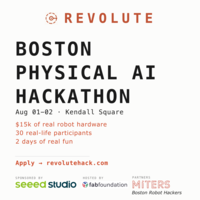
Opportunity Overview Revolute Hackathon runs for 48 hours, from August 1 to August 2, 2026, at FabLab in Cambridge, Massachusetts. It is a beginner-friendly event with a focus on machine learning, artificial intelligence, and robotic process automation. The hackathon has no cash prizes, so the value here is in the experience, networking, and building something you can show off. The event is hosted on Devpost, a platform where hackers submit their projects and judges review them. With only 2 participants registered so far, this is a small, intimate event. That means you will get plenty of face time with mentors and judges, and your project will not get lost in a crowd of hundreds. It is a good fit for someone who wants to try their first hackathon or who wants to test an AI or automation idea in a low-pressure setting. FabLab is a maker space in Cambridge, which puts you right in the middle of one of the most active tech and research hubs in the United States. Cambridge sits across the river from Boston and is home to MIT and Harvard. The area is dense with startups, biotech firms, and university labs, so you will be surrounded by people who work in AI and automation every day. August in Cambridge is warm and humid, with temperatures often in the 80s Fahrenheit. The city is walkable and bike-friendly, and the public transit system connects easily to Boston. The hackathon is organized by Revolute, a group that appears to be running its first event on Devpost. The focus on robotic process automation suggests they care about practical, business-oriented applications of AI, not just theoretical projects. If you are interested in how machine learning can automate repetitive tasks in real companies, this is a chance to build a prototype in that space. Benefits - No cash prizes, but the experience of building and presenting a project in 48 hours - Access to mentors and judges during the event at FabLab - A finished project you can add to your portfolio or GitHub - Networking with other participants, all of whom are working in AI, machine learning, or automation - A small event size, so your project gets individual attention from judges Eligibility - Open to anyone who can attend in person at FabLab in Cambridge, MA - No prior hackathon experience required, the event is explicitly beginner friendly - No stated age, education, or citizenship restrictions - You must register through the Devpost platform to participate Required Documents - No documents are listed. Registration is handled through the Devpost platform, and you will submit your project through the same system at the end of the hackathon. How to Apply 1. Register for the hackathon on the Devpost platform before the submission period opens. 2. Prepare your project during the event window from August 1 to August 2, 2026. 3. Submit your project through the Devpost platform before the submission deadline on August 2, 2026.

Deadline passed🇺🇸 United States
Department Of State logo
Oppora
Grants· Department Of State

Advancing Labor Rights in the Garment Industry

Opportunity Overview The U.S. Department of Labor is funding a single grant of $986,500 to strengthen labor rights protections for garment workers in countries where the U.S. has existing Agreements on Reciprocal Trade (ARTs). The program aims to help workers understand and exercise their labor rights, freely associate, and access timely remedies for workplace abuses without fear of retaliation. The work focuses on the garment supply chain, a sector known for widespread labor violations. Grantees will support workers and worker organizations in organizing and advocating for their rights, documenting violations, and pushing for accountability and remediation. The program also engages employers, civil society, and government stakeholders to improve compliance with labor standards and working conditions. This grant is part of a broader U.S. trade policy effort. By strengthening labor provisions in trade agreements, the program aims to create a more level playing field for responsible businesses and reinforce U.S. economic and strategic interests in key manufacturing markets. The work aligns with the current administration's trade and economic policy priorities. The U.S. Department of Labor runs this program through its Bureau of International Labor Affairs (ILAB), which has a long history of funding projects to combat child labor, forced labor, and other labor rights abuses globally. ILAB works with partners in more than 90 countries, funding research, technical assistance, and direct support to workers and communities. Benefits - Grant amount of $986,500, awarded as a single award - Funding supports activities including worker organizing, advocacy, documentation of violations, and stakeholder engagement - Program contributes to improving labor standards and working conditions in the garment sector - Supports a level playing field for responsible businesses in global supply chains Eligibility - U.S.-based non-profit organizations/NGOs, with or without 501(c)(3) status - Private, public, or state institutions of higher education - For-profit organizations or businesses - Foreign-based non-profit organizations/nongovernment organizations (NGOs) - Public International Organizations Required Documents - Full application package as required by the U.S. Department of Labor's grant application process - Documentation of organizational status (e.g., proof of non-profit status, incorporation documents) - Detailed project proposal outlining activities, timeline, and budget - Information on prior experience with labor rights or related programming How to Apply 1. Review the full grant announcement and application instructions from the U.S. Department of Labor. 2. Prepare your complete application package, including all required documents and a detailed project budget. 3. Click the Apply button below to submit your application.

Deadline passed🇺🇸 United States
Department Of State logo
Oppora
Grants· Department Of State

Global Cybercrime and Cryptocurrency Assessment and Intelligence Gathering

Opportunity Overview The U.S. Department of State's Bureau of International Narcotics and Law Enforcement Affairs (INL) is running an open competition for organizations to tackle cybercrime and cyber-enabled crimes that harm American communities. The program will fund projects addressing cyber intrusions, online fraud, online-facilitated drug trafficking, digital piracy, and the criminal misuse of cryptocurrency and virtual assets. Two awards are available, with individual grants ranging from $200,000 to $2,196,890. The scale of the problem is significant. A 2018 Gallup survey estimated that one in four American households has been harmed by these crimes. Criminals exploit the pseudonymous and borderless nature of virtual assets to launder proceeds, evade law enforcement, and victimize Americans at scale. President Trump's March 2026 Executive Order strengthened efforts against cybercrime targeting U.S. families, businesses, and critical infrastructure, and this funding competition is part of that push. INL is the State Department bureau responsible for helping countries build their capacity to fight crime and corruption. It works on counter-narcotics, anti-money laundering, and rule of law programs around the world. This particular competition focuses on the intersection of traditional crime and digital technology, where criminal networks use encryption, cryptocurrency, and cross-border payment systems to operate beyond the reach of any single country's law enforcement. The competition is open to a wide range of organizations. U.S.-based nonprofits, educational institutions, and for-profit companies can apply, as can their foreign-based counterparts. This is a broad call for proposals, meaning both established international NGOs and specialized private firms with relevant expertise are eligible to compete. Benefits - Award ceiling of $2,196,890 per project - Award floor of $200,000 per project - Two awards available in total Eligibility - U.S.-based non-profit or non-governmental organizations (NGOs) - U.S.-based educational institutions subject to section 501(c)(3) of the U.S. tax code - U.S.-based educational institutions subject to section 26 US 115 of the U.S. tax code - Foreign-based non-profits or non-governmental organizations (NGOs) - Foreign-based educational institutions - U.S.-based for-profit organizations - Foreign-based for-profit organizations How to Apply 1. Review the full solicitation and program objectives to confirm your organization's eligibility and alignment with the funding priorities. 2. Prepare a complete application package that addresses the specific cybercrime typologies outlined in the competition notice. 3. Click the Apply button below to submit your application.

Deadline passed🇺🇸 United States

Looking for more from United States?

Browse all countries or use our Opportunity Finder to match by profile.